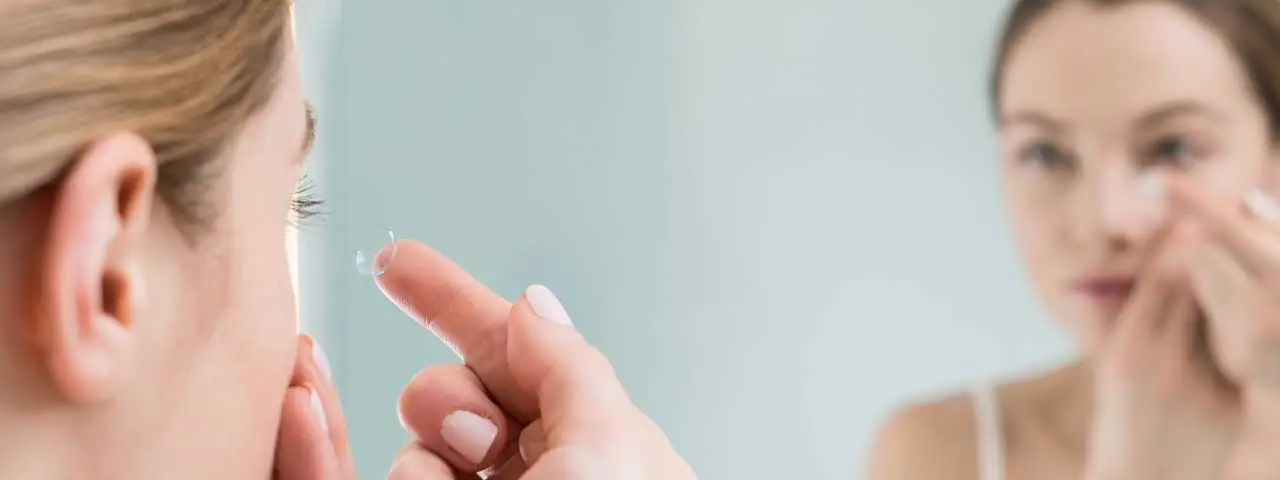
Why Can Contact Lenses Make Dry Eye Symptoms Worse?
Contact lenses sit within the tear film that keeps the surface of your eyes lubricated. When that tear film becomes unstable, lenses may begin to feel dry or uncomfortable, particularly later in the day.
Contact lens discomfort may be influenced by several factors, including:
- Dry eye or meibomian gland dysfunction
- Lens material or design
- An improper or changing lens fit
- Wearing lenses longer than recommended
- Reduced blinking during screen use
- Environmental conditions
- Contact lens solutions or care routines
An evaluation can help distinguish a contact lens problem from an underlying ocular surface condition.
Signs of Contact Lens-Related Dry Eye
Symptoms may become more noticeable after several hours of contact lens wear and can include:
- Dry or gritty eyes
- Burning or stinging
- Redness
- Fluctuating or blurry vision
- Contact lenses that become increasingly noticeable
- Excessive watering
- Needing to remove your lenses earlier than expected
Persistent discomfort is a reason to have your lenses and eye surface evaluated rather than simply trying to tolerate them.
Improving Contact Lens Comfort
The appropriate solution depends on why your lenses are uncomfortable.
After evaluating your tear film, eyelids, eye surface, prescription, and current lenses, your optometrist may recommend changes to your lens type, material, replacement schedule, wearing routine, or dry eye management plan.
For some patients, daily disposable lenses or another soft lens design may improve the wearing experience. Others may benefit from addressing an underlying dry eye or eyelid condition before changing lenses.
Scleral Lenses for Dry Eye
When conventional contact lenses remain uncomfortable, scleral lenses may be an option for some patients with more significant dry eye or ocular surface concerns.
Scleral lenses vault over the cornea and hold a reservoir of preservative-free saline between the lens and eye surface. This design can provide vision correction while keeping the corneal surface covered with fluid during wear.
A specialty contact lens evaluation can determine whether scleral lenses are appropriate for your eyes.
Contact Lens Habits That Support Healthy Eyes
Good lens habits matter for both comfort and eye health.
Follow the wearing and replacement schedule provided by your optometrist, wash and dry your hands before handling lenses, and use the recommended cleaning and storage products. Never use tap water to clean or store contact lenses.
Remove your lenses and contact an eye doctor if you develop significant redness, pain, discharge, light sensitivity, or a sudden change in vision.
Contact Lenses & Dry Eye in Huntington Beach
Dry eye does not automatically mean you have to give up contact lenses. The first step is understanding why your current lenses have become uncomfortable.
Pacific Eye Care can evaluate your dry eye symptoms, contact lens fit, and ocular surface health and recommend options based on what your eyes need.