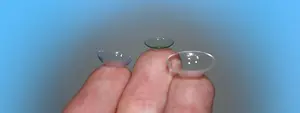
Gas permeable contacts are lenses which are made from hard plastic materials. They’re called ‘permeable’ because they allow oxygen to pass through and reach the front of your eye for a more breathable feel.
Unlike soft lenses, GP lenses don’t contain any water. Because of this, many patients find that their GP contacts dehydrate less often. They’re also more durable because the firm materials make it hard for the lenses to tear.
The Advantages Of Gas Permeable Contact Lenses
Gas permeable lenses give our patients some great benefits. In addition to giving you good vision correction for common vision problems, they also offer:
Breathability
More oxygen means that air can reach the cornea, letting your eye “breathe”. This gives you better comfort for all-day wear.
Affordability
GP lenses are tailor-made for each patient. Although there is an initial higher cost, over time, they’re actually more cost effective since you won’t need to replace them often. Similar to a custom-designed outfit, GP lenses may be priced higher at first, but they provide greater long-term value.
Reduced Likelihood Of Attracting Bacteria
Since they don’t hold water, gas permeable lenses are less likely to have bacteria and harmful buildup. This makes them more hygienic and a healthier choice for your eyes.
However, gas permeable lenses may not be for everyone.
The Disadvantages Of Gas Permeable Contact Lenses
While gas permeable lenses offer benefits to patients with vision correction needs, there are some disadvantages you should know about.
It Takes Time To Get Used To Them
Patients who are used to soft contacts find that it takes a while to get used to GP lenses. That’s because of something called ‘lens awareness’. When you blink, you can feel the edge of the lens in your eye. Lens awareness doesn’t hurt or cause discomfort, but patients report feeling something odd in their eye or sensing a sudden physical reminder that the lens is there.
They Move Around Your Eye
Gas permeable lenses are known to slip off the center of your eye. This usually lasts for mere seconds, but when it happens multiple times throughout the day, it can become irritating very quickly.
Tiny Particles Can Get Underneath
You know that feeling when something is stuck in your eye? This can happen with GP lenses. Tiny pieces of debris can get lodged underneath the lenses, causing pain or discomfort.
If you’ve tried gas permeable lenses and have had any of these experiences, or you’re simply looking for something more comfortable for all-day wear, it’s time to try scleral lenses.