
Understanding how close-up activities and everyday habits relate to childhood myopia.

What’s The Connection Between Near Work And Myopia?
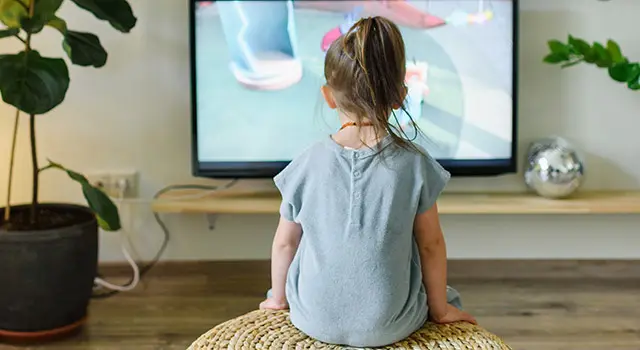
Reading, homework, phones, tablets, and computers are a regular part of childhood. Researchers continue to study how these close-up activities relate to myopia, or nearsightedness, particularly when children spend long periods focused at near distances.
Near work is only one piece of the picture. Genetics, age, time spent outdoors, and other factors can also influence whether myopia develops and how it progresses.
What Is Myopia?
Myopia causes distant objects to appear blurry while near vision is typically clearer. It often develops during childhood and can progress while the eyes are still growing.
Family history is an important risk factor, but a child’s environment and visual habits may also play a role. Regular eye exams allow your optometrist to monitor changes in your child’s prescription and eye health over time.
What Is Considered Near Work?
Near work includes activities that require sustained focus at a close distance.
Common examples include:
- Reading and writing
- Homework and studying
- Using a smartphone or tablet
- Computer work
- Drawing and other detailed close-up activities
- Reading music or practicing certain instruments
Near work is a normal and necessary part of school and daily life. The goal is not to eliminate it, but to encourage balanced visual habits.
How Are Near Work & Myopia Connected?
Research has found an association between greater amounts of near work and myopia in children, although near work alone does not explain why a child becomes nearsighted.
How children use their eyes may also matter. Long periods of uninterrupted close work can place sustained demands on the visual system, which is one reason regular breaks are a sensible habit.
Time outdoors has also been associated with a lower likelihood of children developing myopia. Encouraging outdoor activity alongside healthy near-work habits can be a practical part of supporting your child’s visual development.
Healthy Visual Habits for Children
Small changes can help break up long periods of close focusing.
Encourage your child to:
- Take regular breaks from reading and screens
- Look across the room or into the distance periodically
- Avoid holding books and devices unnecessarily close
- Spend regular time outdoors
- Use comfortable lighting for homework and reading
- Tell you if distance vision becomes blurry
These habits do not replace eye care or myopia management when treatment is indicated, but they can support a more balanced visual routine.
How Myopia Management Can Help
If your child’s nearsightedness is progressing, myopia management may provide options beyond repeatedly updating their glasses prescription.
Pacific Eye Care offers evidence-based approaches designed to help slow myopia progression. Depending on your child’s individual needs, options may include Ortho-K, myopia-control contact lenses, or low-dose atropine.
A myopia evaluation allows our optometrists to review your child’s prescription history, eye health, lifestyle, and other relevant factors before recommending an appropriate approach.
Have You Noticed Changes in Your Child’s Distance Vision?
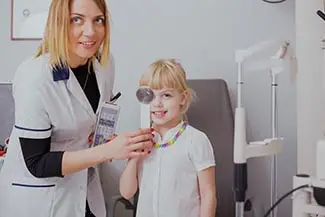
If your child is squinting to see far away, having difficulty seeing the board at school, or needing stronger prescriptions over time, an eye exam can help determine what is changing.
Pacific Eye Care provides pediatric eye exams and myopia management for families in Huntington Beach and surrounding communities.
Learn More About Myopia Management

Is Your Child A Candidate For Myopia Management?
Lorem ipsum dolor sit amet, consectetuer adipiscing elit. Aliquam lacus urna, semper nonummy, venenatis in, lacinia sit amet, mauris...

Ortho-K, the Safe Way to Sleep in Contact Lenses
Lorem ipsum dolor sit amet, consectetuer adipiscing elit. Aliquam lacus urna, semper nonummy, venenatis in, lacinia sit amet, mauris...

Myopia Management FAQ
Lorem ipsum dolor sit amet, consectetuer adipiscing elit. Aliquam lacus urna, semper nonummy, venenatis in, lacinia sit amet, mauris...

Lorem ipsum dolor sit amet, consectetuer adipiscing elit. Aliquam lacus urna, semper nonummy, venenatis in, lacinia sit amet, mauris...

Scientific Research on Myopia Management
Lorem ipsum dolor sit amet, consectetuer adipiscing elit. Aliquam lacus urna, semper nonummy, venenatis in, lacinia sit amet, mauris...

Lorem ipsum dolor sit amet, consectetuer adipiscing elit. Aliquam lacus urna, semper nonummy, venenatis in, lacinia sit amet, mauris...
Myopia Management Blog
Lorem ipsum dolor sit amet, consectetuer adipiscing elit. Aliquam lacus urna, semper nonummy, venenatis in, lacinia sit amet, mauris...
Read Our Latest Posts
Lorem ipsum dolor sit amet, consectetuer adipiscing elit. Aliquam lacus urna, semper nonummy, venenatis in, lacinia sit amet, mauris...